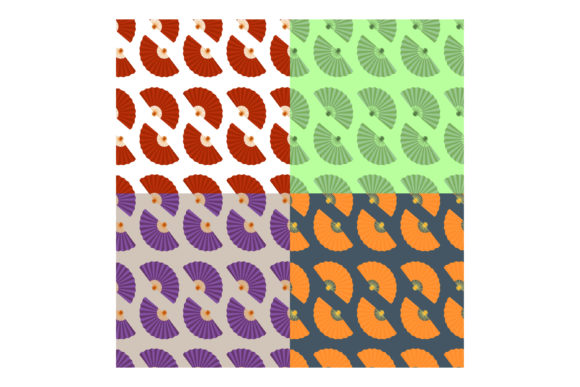
Patterns with Folding Fan of Japanese
Patterns with Folding Fan of Japanese are a distinctive design element that draws from the rich cultural heritage of Japan. These patterns often feature intricate illustrations of folding fans, which have been an integral part of Japanese art and fashion for centuries. The folding fan, or "sensu," is not only a functional object but also a symbol of elegance, grace, and tradition. When incorporated into patterns, it becomes a powerful visual motif that can be used in various applications, including fabric decoration, textile printing, and graphic design.
The appeal of Patterns with Folding Fan of Japanese lies in their ability to blend historical significance with modern aesthetics. They offer a unique way to infuse traditional Japanese elements into contemporary designs, making them popular among artists, designers, and manufacturers looking to create culturally inspired works. Whether used in home decor, clothing, or digital media, these patterns provide a sense of authenticity and refinement that resonates with many audiences.
Why Someone Might Be Interested in Patterns with Folding Fan of Japanese
Individuals interested in Japanese culture, art, or design may find Patterns with Folding Fan of Japanese appealing for several reasons. The motifs often reflect the aesthetic principles of simplicity, balance, and harmony that are central to traditional Japanese art. This makes them particularly attractive to those who appreciate minimalist or classical styles.
Additionally, the folding fan has long been associated with geishas and other traditional performers, adding a layer of cultural storytelling to the patterns. For those seeking to incorporate symbolic elements into their work, these patterns can serve as a meaningful representation of Japanese heritage. They are also widely used in textiles, where they can add visual interest and cultural depth to fabrics such as kimonos, tablecloths, and curtains.
Benefits and Considerations
One of the primary benefits of using Patterns with Folding Fan of Japanese is their versatility. They can be adapted to different scales, colors, and formats, making them suitable for a wide range of creative projects. As vector graphics, they can be easily resized without losing quality, which is especially useful for digital design and print applications.
Another advantage is the cultural richness they bring to a design. By incorporating these patterns, creators can connect with a long-standing artistic tradition and appeal to audiences who value authenticity and craftsmanship. However, it's important to consider the context in which these patterns are used. Misrepresentation or overuse can dilute their cultural significance, so it's essential to approach them with respect and understanding.
Situations Where It May Be a Strong Fit
Patterns with Folding Fan of Japanese are particularly well-suited for projects that aim to evoke a sense of tradition, elegance, or cultural narrative. They are ideal for designers working on products targeted at markets that appreciate Japanese aesthetics, such as luxury fashion, interior design, or cultural exhibitions. In addition, they can be valuable assets for businesses looking to differentiate their brand through unique and meaningful design elements.
For fabric printing, these patterns can enhance the visual appeal of textiles while maintaining a connection to traditional craftsmanship. They are also useful in graphic design, where they can serve as background elements, borders, or decorative accents in posters, packaging, or digital interfaces.
Situations Where Alternatives May Be Worth Considering
While Patterns with Folding Fan of Japanese offer many advantages, there may be cases where alternative design elements are more appropriate. For instance, if the goal is to create a more universal or modern look, simpler or abstract patterns might be preferable. Additionally, in contexts where cultural sensitivity is a concern, it may be necessary to explore other design options that do not carry the same level of historical or symbolic weight.
It's also worth considering the target audience. While some consumers may appreciate the cultural references embedded in these patterns, others may find them less appealing or even confusing. In such cases, alternative designs that are more straightforward or globally recognizable may be more effective.
Practical Decision-Making Insights
When deciding whether to use Patterns with Folding Fan of Japanese, it's important to evaluate the specific goals of the project. Ask questions such as: What message or aesthetic is being conveyed? Who is the intended audience? How does this pattern align with the overall design strategy?
Researching the cultural and historical context of the patterns can also help ensure that they are used appropriately. Consulting with experts or studying traditional Japanese art can provide valuable insights into how these motifs have been historically applied and what meanings they carry.
Finally, testing the patterns in different formats and environments can help determine their effectiveness. Whether used in print, digital media, or physical products, observing how they interact with other design elements can inform better decision-making and lead to more successful outcomes.